
Using Actual Vote
A practical guide for users.
This is the practical guide to using Actual Vote. It tells you how to plan an Actual Vote session, how to make good recordings, what happens after you submit, and how to handle common problems.
A brief overview of what Actual Vote is and why it matters is below. The longer-form orientation — what to know before your first recording, what to expect from the experience, what we can and cannot guarantee, and why the work matters — lives in the “Practicality” section of the Health, Safety, and Practicality Statement. That section is the right place to start if you are new. This guide picks up after that orientation, focusing on operational detail. You do not need to read the whole guide before your first recording; consult the parts that are relevant to what you are doing.
This guide is one of four documents that describe your relationship with Actual Vote. The other three are the Actual Vote User Agreement, the Privacy Policy, and the Health, Safety, and Practicality Statement. This guide is the practical document — the one that tells you how to actually use the app and what to expect from the experience. It is not part of the agreement you make when you create an account, but it covers some of the same ground as the agreement documents in a more conversational, narrative form.
About Actual Vote
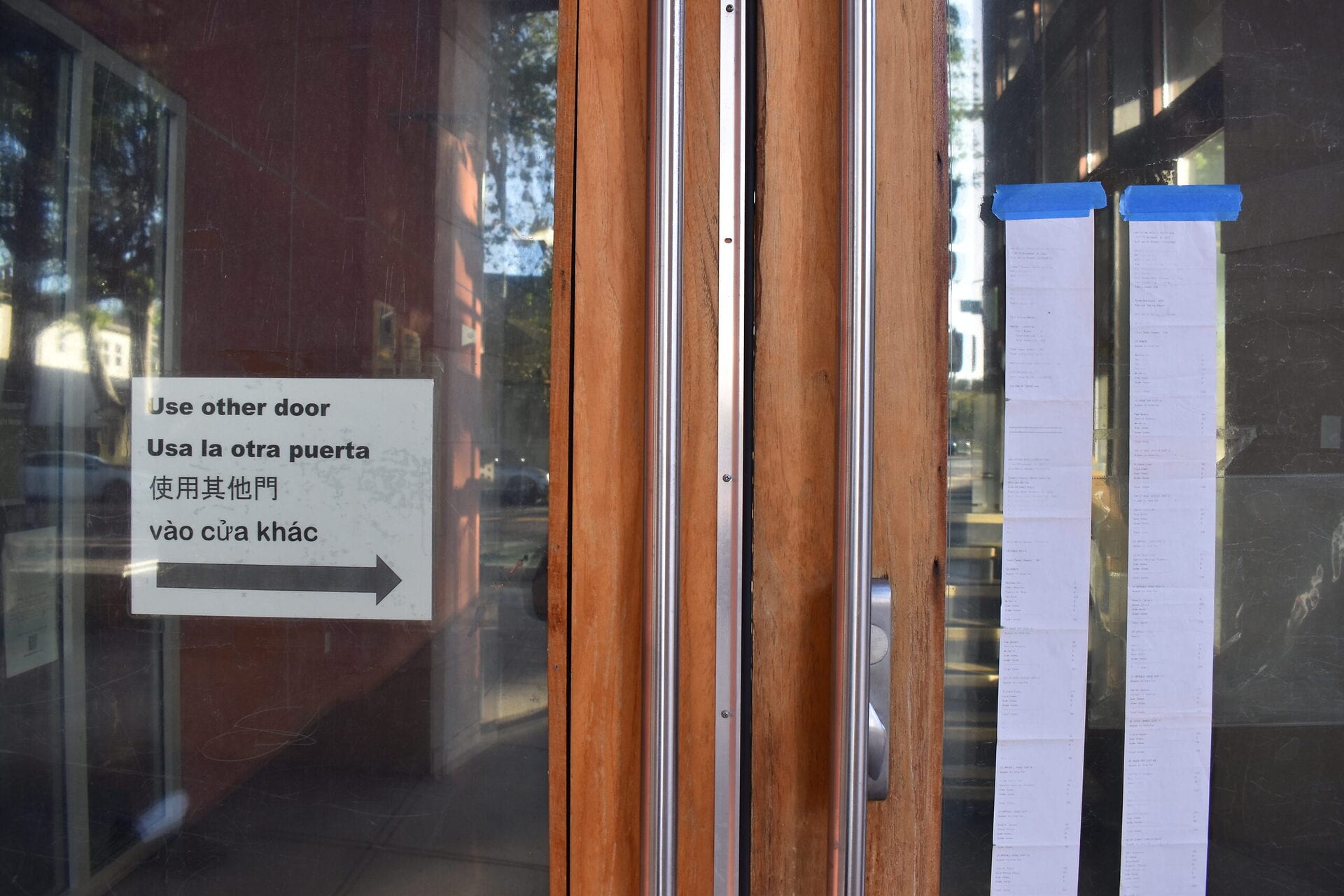
Actual Vote is an app that lets Americans independently verify how their local votes are reported. On election day, voters cast ballots that voting machines then tabulate, and in most jurisdictions each precinct’s tabulating machine prints paper “poll tapes” showing the local vote totals — how many votes each candidate received from that machine, in that precinct, for that contest. The tapes are typically posted publicly at the polling place after polls close. Actual Vote lets you record those tapes with your phone and upload the recordings to America Counts, where we compare the precinct-level totals against the officially reported results to check whether vote reporting was done correctly.
The reason this matters is that vote reporting — the chain that runs from the precinct-level poll tape through county aggregation to the public release of official results — is opaque. Most of the work happens behind closed doors, often involving electronic transfers, manual data entry, and complex software, with little independent verification. When something goes wrong, it usually goes wrong quietly, and the public never finds out. Independent audits are the standard solution for this kind of problem in any high-stakes process — the same reason we don’t let airlines certify their own planes — and Actual Vote brings that principle to vote reporting. When your recording matches the official results, we publish positive evidence that vote reporting in that location was done correctly. When it doesn’t, we surface the discrepancy through the appropriate channels.
Most of the time the audit confirms the official results. That confirmation is not a non-event: it is the kind of public, independently-verified evidence that election legitimacy depends on, and most of the value of Actual Vote actually lies in producing it. Occasionally, the audit identifies a discrepancy that gets investigated and usually resolved through cooperation with the local elections office; in rare cases a discrepancy survives investigation and can become the basis for legal action. Either way, your participation contributes to making your community’s elections more transparent and more verifiable — a meaningful civic contribution that did not previously exist in this form.
Part 1: Doing the work
1.1 Making your plan
The most successful Actual Vote sessions are the ones where the volunteer made a plan in advance. Showing up at a polling place with no plan, just hoping there will be a tape posted somewhere, can work — but it is much more likely to result in a wasted trip than a session that comes home with usable recordings. A few hours of planning before election day pays for itself many times over.
What planning involves, at a high level:
- Choose your method. There are four main ways to use Actual Vote, described in Section 1.2 below. The right one for you depends on your schedule, your jurisdiction’s rules, and how much time you have available. Most new users do election-night recording at polling places, but the other methods are sometimes a better fit.
- Pick your locations. If you are doing election-night recording, decide which polling places you intend to visit and in what order. Consider how long it will take to drive between them, how late you can stay out, and which ones are most accessible after dark.
- Verify the local rules. Find out whether your county actually posts paper poll tapes after polls close, where they typically post them, and how long they typically stay posted. This varies by county and is the single most important piece of information for planning a successful election-night session.
- Coordinate with others. If you know other Actual Vote volunteers in your area, coordinate so you are not duplicating effort. If you are working alone, tell someone where you are going and when you expect to be home.
- Check that your device is supported. Actual Vote runs on any iPhone or iPad on iOS 15 or later, and any Android phone or tablet on 8.0 or later — roughly any phone sold since 2017. All you need beyond that is a working camera and a little free storage (each recording is about 20 MB). Full details are in Section 1.3 of the technical manual.
- Practice before election day. Take a practice recording of the sample poll tape we provide — print it and tape it to a wall. (No printer? A blank wall or a grocery receipt works fine for a dry run; the point is to confirm the app works and rehearse the steps.) Make sure you know how to frame a tape, how to handle low light, and how to upload submissions over a possibly weak network connection.
- Contact us in advance if it matters. If you want a specific commitment that your submissions will be analyzed in time for a particular election, contact America Counts in advance and we will work with you on it. This is especially important if you are planning a substantial effort or if you are working in a jurisdiction we have not previously analyzed.
For step-by-step planning guidance, including specific examples of plans for different methods and different situations, visit the Start Here section of our website. The Start Here guide includes detailed walkthroughs for each of the four collection methods and examples of how other volunteers have organized their work.
1.2 The four ways to use Actual Vote
There are four main methods for collecting poll tape recordings with Actual Vote. Most new users default to the first one, but the other three are sometimes more appropriate depending on your jurisdiction and your situation. Brief descriptions of each are below; the Start Here section has detailed walkthroughs.
1.2.1 Method 1: Election-night recording at polling places
This is the most common method. After polls close on election night, you visit one or more polling places in your area where the paper poll tapes have been posted publicly, and you record them with the Actual Vote app. The recordings happen within hours of the votes being tabulated, before any opportunity for the tapes to be altered. This is the method the app is most directly designed for, and it is the method that produces recordings with the strongest evidentiary character (most contemporaneous, most verifiably independent).
Method 1 is appropriate when:
- Your county posts paper poll tapes publicly at polling places after polls close.
- You can reach the polling places after polls close (generally evening into the night).
- You are comfortable being out at night, possibly alone, in public locations.
Method 1 is not appropriate when:
- Your county does not post paper poll tapes publicly. (Some counties do not.)
- Your schedule does not allow you to be out on election night.
- You have safety concerns about being out at night.
1.2.2 Method 2: Recording at the elections office
Some county elections offices keep copies of paper poll tapes on hand and will allow members of the public to view them by appointment. With Method 2, you contact the elections office in advance, schedule an appointment, and visit the office during business hours to record the tapes they have on file.
Method 2 is appropriate when:
- Your county has an elections office that maintains poll tape records and is willing to make them available.
- You prefer working during regular business hours rather than at night.
- The election has already concluded and you are doing the work after the fact.
The advantage of Method 2 is that it is less time-pressured than election-night recording and does not require you to be out at night. The disadvantage is that the recordings are made later, after the original tape has already moved through some of its chain of custody, which slightly reduces their evidentiary character compared to Method 1.
1.2.3 Method 3: Recording from records you have been given
If an election official, a poll worker, or another authorized person has provided you with paper poll tapes directly — perhaps as part of a coordinated transparency effort or in response to a request — you can record those tapes with Actual Vote. The recording is made wherever you are when the tapes are in your hands.
Method 3 is uncommon but useful in specific situations, particularly when you have a cooperative relationship with the elections office or with individual officials.
1.2.4 Method 4: Recording from public records requests
Every state has a public records law that allows members of the public to request government records, including (in essentially all states) paper poll tapes from past elections. You can submit a public records request to your county elections office for the poll tapes from a specific election, and when the office produces them, you can record the tapes with Actual Vote.
Method 4 is appropriate when:
- You are interested in a past election rather than an upcoming one.
- The elections office in question is willing to fulfill records requests reasonably.
- You are comfortable with the formal request process (which can take days to weeks).
The advantages of Method 4 are that it works for any past election, it does not require you to be physically present on election night, and it produces a documentary record of the request itself that adds to the chain of custody. The disadvantage is that it is slower and more bureaucratic than the other methods, and elections offices vary considerably in how cooperatively they handle public records requests.
For step-by-step instructions on each method, including templates for public records requests and example scripts for contacting elections offices, visit the Start Here section.
1.3 Where recording is legal and where it isn’t
Recording publicly posted poll tapes after polls close is legal in the situations Actual Vote is designed for. The Technical Manual has a separate section that explains the general legal framework in detail. The short version is below.
1.3.1 Generally legal situations
These are the situations Actual Vote was designed for, and recording in these situations is legal in most jurisdictions:
- Recording publicly posted poll tapes after polls have closed, when the tapes are visible from a public area (the sidewalk outside a polling place, for example).
- Recording poll tapes during a scheduled appointment with a county elections office, with the office’s permission.
- Recording poll tapes that have been provided to you directly by an election official.
- Recording poll tapes obtained through a public records request that the elections office has fulfilled.
1.3.2 Situations that require permission or are uncertain
These situations may be legal but require explicit permission or vary by jurisdiction:
- Recording inside a polling place while the polls are open. Most jurisdictions restrict photography and recording inside polling places to protect voter privacy. Do not do this without explicit permission from poll workers.
- Recording poll tapes posted in locations that are technically private but appear publicly accessible. A poll tape posted in a school hallway, for example, may be in a location where you do not have a clear right to be present.
1.3.3 Local rules vary
State and county rules about photography, recording, and access to election records vary substantially. You are responsible for knowing the rules that apply where you are using the app. America Counts cannot give you legal advice about your specific situation. If you have questions about a specific jurisdiction, consult local resources or qualified counsel before you record.
When in doubt, the safest practice is to record only publicly posted poll tapes from a public area after polls have closed, and to leave immediately if anyone tells you to stop.
1.4 How to make a good recording
A good Actual Vote recording captures the contents of the poll tape clearly enough that the vote totals can be transcribed accurately. The technical requirements are not demanding, but a few practices make a substantial difference.
1.4.1 Lighting
Poll tapes are often posted in poorly-lit locations: outside a building at night, behind a window, in a school entryway with the lights off. Poor lighting is the single most common reason recordings are difficult to transcribe. Bring a flashlight. Your phone’s built-in flashlight can work in a pinch, but a dedicated flashlight gives you better control over the angle and brightness. Aim the light at the tape, not at the camera, and avoid creating reflections off any glass or laminated surface.
1.4.2 Framing
Get the entire tape in the shot. If the tape is too long to fit in one frame, slowly pan along the length of the tape so that all of it is captured. Move slowly enough that the camera can focus and the autofocus does not get confused. If you have to record the same tape in multiple takes, that is fine — just make sure each take is identifiable.
Avoid framings that include:
- Other people in the background.
- License plates.
- Other documents or papers that might contain personal information.
- Children.
- Reflections of yourself in the glass.
1.4.3 Steadiness
Hold the camera steady. If your hands are shaky, brace your phone against a wall or a railing. The video does not need to be cinematic, but it does need to be readable. Blurry video is hard to transcribe and may be rejected.
1.4.4 Audio
Do not speak while recording. This is the same rule given in the “Never include personal information in a recording” subsection of the Health, Safety, and Practicality Statement, and it is important enough to repeat in the practical context. Silent recording is the safest practice. If you absolutely need to identify something — the precinct number on a tape that is unlabeled, the date for a tape recording made out of context, the location for a tape recorded somewhere unusual — you can briefly state objective information about the recording itself. Do not speak about anything personal. Do not have a conversation with anyone while recording. Do not let anyone else’s voice be captured.
1.4.5 What to do if the tape is hard to read
If the poll tape is partially obscured, damaged, or too far away to read clearly, capture what you can and submit it anyway. We may be able to enhance the recording or use it as cross-validation against other recordings of the same tape. Do not give up just because the conditions are imperfect; partial information is better than no information.
If a tape is genuinely impossible to record (locked behind a fence, completely obscured, not posted at all), document the situation if you can — for example, by recording the location where the tape should have been. These context recordings are sometimes useful even when no transcribable tape data is captured.
1.4.6 Practice before election night
We provide a sample poll tape that you can use to practice making a recording before election night. We strongly recommend doing a practice recording at home or in a calm setting before you try to use the app under pressure in the field. The practice recording confirms that the app works on your device, that you understand the basic workflow, and that you can frame and capture a tape effectively.
1.5 Safety when recording
When you use Actual Vote, you are often in public, sometimes at night, sometimes alone, doing something that may be unfamiliar to bystanders. Your safety is your responsibility. America Counts is not responsible for your safety when you use the app.
1.5.1 Basic precautions
The basics are common-sense precautions for being in public, especially at night:
- Make a plan and share it with someone. Decide which polling places you intend to visit and tell a friend or family member where you will be and when. If you are doing a long election-night session, check in with that person periodically.
- Be aware of your surroundings. Pay attention to who is around, whether the area feels safe, and what your exit routes are.
- Bring a flashlight. Useful for both safety (seeing where you are walking) and recording (illuminating the tapes).
- Take a friend or family member with you if possible. Having a second person along is safer and also makes the activity less intimidating to bystanders.
- Don’t go anywhere outside your risk tolerance. If a location feels dangerous, leave. Do not record a poll tape if doing so puts you at risk.
- Trust your instincts. If something feels wrong, leave. There will be other elections.
1.5.2 Don’t record while polls are open
Do not use Actual Vote at a polling place or vote center while the polls are still open, unless you have explicit permission from poll workers to be there. Recording while polls are open can interfere with voters, can violate local rules about polling place conduct, and can put you at legal risk. Wait until polls close.
1.5.3 If a poll worker or election official asks you to stop
If a poll worker, election official, or law enforcement officer asks you to stop recording, stop recording and leave, even if you believe the request is improper. Do not argue. Do not try to explain why what you are doing is legal. Do not insist on your rights. Walk away politely and then contact America Counts to let us know what happened. We will document the incident and use it to advocate for better procedures in that jurisdiction over time.
The exception is if you are in immediate physical danger or if someone is trying to detain you unlawfully — in those cases, your safety comes first and you should do whatever you need to do to get to safety. But for any normal situation where someone is just asking you to stop, the right response is to comply and leave.
1.6 What to do if someone approaches you
When you are recording a poll tape in public, occasionally a bystander or poll worker will notice you and ask what you are doing. Most of these conversations are friendly and curious. Some are skeptical. A few are hostile. Knowing how to handle each kind of conversation makes the experience much less stressful.
1.6.1 The friendly curious person
This is the most common case. Someone notices you, asks what you are doing, and is genuinely interested. You can use this as an opportunity to explain Actual Vote and even invite them to download the app and join in.
Sample script:
“I’m using Actual Vote to record poll tapes. Here, let me show you. America Counts will compare the vote totals on these recordings to the official results when they’re released, and flag any discrepancies. It’s an independent way of verifying that vote reporting was done correctly. You can do it too if you want — just search for Actual Vote in the App Store or Play Store.”
Most people respond positively to this. You will sometimes recruit new users this way.
1.6.2 The skeptical or confused person
This person is suspicious of what you are doing but is willing to listen to an explanation. Be friendly but assertive. The key points are: this is legal, this is non-partisan, this is meant to verify (not challenge) the election, and you are not affiliated with any campaign or government.
Sample script:
“Hi, my name is [name]. I’m a resident of this county and I’m using Actual Vote to record the poll tapes posted here. It’s legal to record publicly posted poll tapes after polls have closed, and what I’m doing is non-partisan — it has nothing to do with any campaign. The point is to compare these tape totals against the officially reported results when they come out, as an independent check that vote reporting was done correctly. In most cases the audit just confirms that everything was done right, which is good for everyone.”
If the person remains skeptical but is not threatening you, you can continue recording while talking. If the conversation becomes uncomfortable, end it and move on.
1.6.3 The accusatory or hostile person
This person believes you are doing something wrong and may threaten to call the police, take your phone, or escalate the situation. Do not engage. Your safety and the integrity of your recordings are more important than winning the argument.
Sample script:
“Okay, I’m leaving. What I’m doing is legal, but I’m leaving. Have a good night.”
Then leave. Do not delete the recordings — they are valuable and the person has no right to make you delete them. Just leave the location. If the person follows you or escalates, prioritize your safety: get to a populated area, call for help if needed, do not go back to your car if someone is following you on foot.
If the police are called and arrive on the scene, be polite, explain briefly what you were doing, show them the app, and follow their instructions. If they ask you to leave, leave. If they ask for your identification, comply. If they want to seize your phone, do not resist, but ask whether they have a warrant and document the encounter as best you can. Contact America Counts afterward to report what happened.
1.6.4 After any incident
If you have any incident while using Actual Vote — confrontation, asked to leave, police encounter, anything that feels notable — please contact us and let us know what happened. We track these incidents to advocate for better poll tape procedures and for clearer guidance for users in the affected jurisdictions. Your report helps the next user.
1.7 Working with other volunteers
Actual Vote can be used by an individual working alone, and most of this guide is written with that case in mind. But some of the most effective Actual Vote efforts involve teams of volunteers working together to cover many polling places in a single jurisdiction or to record many tapes at an elections office in a single session.
If you are interested in organizing or joining a team in your area, the basic considerations are:
Coordination matters more with teams. A team effort needs someone to organize the assignments — who will visit which polling places, in what order, with what equipment. The organizer does not need to be experienced; they just need to be willing to do the coordination work. Spreadsheets are usually involved.
Team-based recording at elections offices can be very efficient. An office appointment that yields tapes from many precincts is well-suited to a team where one person operates the camera, another moves the tapes through the recording area, and others handle the metadata. A few hours of team effort can produce dozens or hundreds of recordings.
The same safety and privacy rules apply. A team is safer than an individual when out at night, but the privacy rules about not capturing personal conversations are more important when multiple people are present. If you are recording in a setting where multiple people are talking — at an elections office table, for example — you need to take active care to keep the conversation away from personal topics. We have had to reject submissions where volunteers at a recording table were captured discussing private health information. Don’t let that happen to your team.
Contact America Counts before a substantial team effort. If you are organizing a team to do a coordinated effort, especially in a jurisdiction we have not previously worked in, please contact us in advance. We can help with coordination, provide guidance specific to your jurisdiction, and make sure the resulting submissions are in our processing queue at a known time. This is also the way to get a commitment that the team’s submissions will be analyzed in time for a specific election.
The Start Here section has more guidance on team-based efforts and on how to organize volunteers in your area.
1.8 Talking about Actual Vote with people in your life
Some Actual Vote users find it slightly awkward to explain what they are doing to family members, friends, and coworkers. The activity is unfamiliar to most people, and the context (going out at night to film at polling places) can sound strange to someone who doesn’t know what Actual Vote is. A short explanation usually clears things up.
1.8.1 Explaining to a curious spouse, friend, or family member
Most people who ask are just curious. They want to understand what you’re doing and why. A simple explanation works:
“I’m using a phone app called Actual Vote to help audit how votes are reported in our local elections. Anyone can do it. After the polls close, I go to polling places and record the paper vote totals that get posted publicly, and the recordings get used to check whether the official results match the totals on the tapes. Most of the time they do, which is good — it confirms the count was reported correctly. It’s nonpartisan and totally legal, and it’s a way of contributing to honest elections without doing anything dramatic.”
Most people respond well to this explanation. Some will want to know more; some will offer to help. A few will be uninterested but supportive.
1.8.2 Explaining to a skeptical family member
If someone in your family is skeptical — maybe they are politically opposite from you and assume any “election integrity” work must be partisan, or maybe they are just protective of you and concerned about safety — the explanation is similar but with more emphasis on the nonpartisan and routine nature of the work:
“I know it might sound like one of those election conspiracy things, but it’s actually the opposite. The tool is run by a nonpartisan nonprofit, the methodology is just comparing publicly posted vote totals against publicly reported official results, and the outcome is almost always confirming that the count was correct. It’s the kind of routine verification that the system is supposed to have anyway, just done by regular people instead of just by the elections offices themselves. Nothing about it favors any party or candidate. It’s just trying to make the process more transparent.”
If the skepticism is about safety, you can explain the precautions you are taking — making a plan, sharing it with someone, not going anywhere unsafe, being prepared to leave if anything feels off. The point is to reassure them that you are taking the practical considerations seriously.
1.8.3 Explaining to a coworker, supervisor, or employer
If your job involves any kind of political sensitivity — government work, journalism, partisan organizing, anything where your participation in election-adjacent activities could be misunderstood — it is worth thinking ahead about how to explain Actual Vote to a coworker or supervisor if they ask.
The framing that usually works best is to emphasize that Actual Vote is a nonpartisan civic tool, that America Counts is a 501(c)(3) nonprofit, that the methodology is independently verifiable and publicly documented, and that your participation is volunteer civic engagement comparable to serving as a poll worker or filing public records requests. None of these activities is politically aligned, and Actual Vote belongs in the same category.
If your employer has specific rules about outside political activity, check those rules before you participate. Actual Vote is not political activity in any partisan sense, but employers’ rules sometimes draw broad lines, and you should know where the lines are before you cross them.
1.8.4 Inviting people to join
If anyone you know expresses interest, invite them to download the app and try it themselves. Actual Vote is more fun and more effective when more people are involved. You can point them at the app stores, at our website, or just walk them through downloading the app on their phone next to you. The more people in your community who are doing this work, the more representative and useful the audit becomes.
Part 2: After you submit
2.1 The vetting process
The first thing that happens to your submission is vetting. Our staff reviews the recording to determine whether it can be approved for publication. The vetting process checks:
- Is this actually a recording of a poll tape (not a recording of something else)?
- Does the recording contain any visible personal information that should not be made public?
- Does the audio contain any private conversation, personal information, or other content that should not be made public?
- Is the recording of usable quality?
Submissions that pass vetting are approved and move to the next steps. Submissions that fail vetting are handled differently depending on why they failed:
- Submissions containing seriously inappropriate content are deleted from our servers immediately.
- Submissions that contain transcribable poll tape data but are not suitable for public display (for example, because they contain a snippet of background conversation that includes personal information) are kept in our internal records but are not published to the public archive. We can still incorporate the transcribable poll tape data into our analyses, which means the submission still contributes to the methodology — but the transparency benefit of public availability is lost for that particular submission.
- Other rejected submissions that may still have value (for example, recordings that show context around a polling place but are not themselves transcribable) are retained in our internal records in case they become relevant later.
The vetting process is conducted by humans and is not perfect. The most important thing you can do to make vetting work well is to follow the rule given in the Health, Safety, and Practicality Statement: never include personal information of any kind in a recording. If you stick to silently recording only the poll tape, your submission will almost certainly pass vetting cleanly.
2.2 Publication, analysis, and findings
2.2.1 Publication to the public archive
Approved submissions are published to the public archive at av.democracycounts.org. Anyone in the world can view them. Search engines may index them. Other users, journalists, election officials, and the general public can download them. The recordings stay in the archive indefinitely.
You can always see your own submissions in your user area at av.democracycounts.org. You will see when each submission was uploaded, when it was vetted, and (for approved submissions) the public-facing entry in the archive.
2.2.2 Transcription
For elections where America Counts is conducting an analysis, the next step is transcription. Our analysts transcribe the vote totals shown on the poll tape into structured data — a list of contests, choices, and numerical totals. The transcription is done with the help of AI tools and is verified by humans before it is finalized.
2.2.3 Comparison
Once the transcription is complete, we compare the transcribed values against the officially reported results published by the elections office. The comparison checks whether the poll tape totals match the centrally-reported totals for each precinct, contest, and choice. Most of the time they do.
2.2.4 Investigation of discrepancies
If the comparison turns up an initial non-match, we investigate it. The investigation has several steps and is designed to identify innocuous explanations before treating the difference as a discrepancy finding. We check whether the transcription was correct, whether our comparison logic was right for the jurisdiction, whether the elections office has additional context that explains the difference, and so on. Most initial non-matches resolve during investigation — through AC’s own review or a cooperative ask to the elections office — and close as a match.
2.2.5 Publication of findings
Once an analysis is complete, we publish the results. Most analyses confirm that the official results were reported correctly, and the published report says so. A small number of analyses identify discrepancies that survived investigation. These are reported with appropriate care, without speculation about causes.
2.2.6 What you will and won’t see
You can always see your own submissions in your user area, as described above. You may not see real-time updates on the analytical process. Transcription, comparison, and investigation can take days or weeks. We do not currently send users notifications about the status of analyses involving their submissions. If you want to know what happened with a specific analysis, you can check our published reports or contact us.
2.3 Privacy and your recordings
This section describes the privacy considerations of using Actual Vote at a practical level. The full legal description is in our Privacy Policy. The two are meant to be consistent; this section is the user-facing version.
2.3.1 What gets collected
When you use Actual Vote, we collect:
- The video you record.
- The GPS coordinates of where you recorded it.
- The date and time of the recording.
- Information about your device (model, OS, app version).
- Any user-entered information you add to the submission.
- Your account information (your email address and display name, which we receive from Google when you sign in).
The Privacy Policy has more detail on each of these. Note that we do not have an Actual Vote password — sign-in is handled by Google. In particular, the GPS coordinates are mandatory — you cannot submit a recording without them, because they are essential to the methodology and to the evidentiary value of the submission.
2.3.2 What becomes public
Approved submissions are published to the public archive. Anyone can view them. Once a submission is in the archive, it is publicly accessible globally and indefinitely. This is covered in detail in the “Your recordings will be public” subsection of the Health, Safety, and Practicality Statement; it remains the most important fact about how Actual Vote handles your submissions.
The vetting process tries to catch personal information before it gets to the public archive, but it is conducted by humans and is not perfect. The most reliable protection is at the recording stage, by you, not at the vetting stage, by us.
2.3.3 What stays private
Several pieces of information about you stay private:
- Your account information (your email address and display name) is not published. Other users cannot see it. We do not have a password to keep private, because sign-in is handled by Google.
- Your real-world identity is not published in association with your submissions. The public archive does not display your name, your email address, or any other identifying information about you as the submitter. The “created by” field that ties a submission to its submitter is visible only to authenticated administrators in our internal system. Members of the public looking at the archive see the recording, the location and timing data, and our analytical records — but not who made the recording.
- Your detailed activity on the app (which submissions you uploaded when, how long you spent in the app, which features you used) is not published.
- Your communications with America Counts staff are not published, unless you send us a request that we publicly answer for the benefit of other users.
2.3.4 Cooperation with subpoenas and legal requests
Our institutional posture on legal requests for user information has three parts:
- We require formal legal process. We do not respond to informal requests for information about a specific user or submission. To get information from us, a requester must serve a subpoena, court order, search warrant, or similar formal instrument.
- We comply with valid orders, and challenge improper ones. When we receive formal legal process that is valid on its face and that we cannot in good faith resist, we produce what is asked for. When a request is overbroad, irrelevant, or pretextual, we object, move to quash, or seek to narrow it through the available legal channels first.
- We notify affected users when we can. When a request seeks information about a specific user, we make reasonable efforts to notify that user before producing anything, so they have a chance to seek their own counsel. We do not provide notice when a court or applicable law prohibits us from doing so (a “gag order”), when notice would create an immediate safety risk, or when a law-enforcement agency is responding to a credible, time-sensitive emergency such as a threat to life.
The full description is in Section 6.3 of the Privacy Policy. This summary is meant to be consistent with the Privacy Policy; if the two appear to conflict, the Privacy Policy controls.
2.3.5 Your rights regarding your data
You can access your own past submissions through your user area at av.democracycounts.org. You can also contact us to request other actions on your data — correction, deletion, account closure, and so on. The Privacy Policy describes these rights and the limits on them in detail.
2.4 Your recordings as legal evidence
This section explains the legal-evidence dimension of Actual Vote in plain terms. A more detailed treatment is available in the Actual Vote Technical Manual and in a standalone analytical article for lawyers.
2.4.1 What “evidence” means here
The recordings you submit through Actual Vote are not casual user-generated content. They are forensic evidence about how votes were reported in a specific place at a specific time. The features that make them evidence:
- They are contemporaneous — captured at the time the poll tape was visible, before any opportunity for the tape to be altered.
- They are GPS-tagged — location-stamped to the polling place where they were made.
- They are timestamped — date- and time-stamped to when you made the recording.
- They have a documented chain of custody — we maintain a record of every step the recording takes from your device through our backend to the public archive.
- They are authenticated — we can demonstrate that the recording is what it claims to be, through our vetting and processing procedures.
These features give the recording evidentiary value that ordinary cellphone videos do not have. They make the recording usable in legal proceedings if a proceeding ever needs to consider it.
2.4.2 When a recording becomes legally relevant
Most recordings will never be involved in any legal proceeding. They will be part of routine audits, contribute to the public archive, and serve their purpose without ever entering a courtroom. This is the normal case.
In a small minority of cases, a recording may become the basis for a legal proceeding. The kinds of proceedings that could involve Actual Vote evidence include:
- Regulatory complaints to state or federal election oversight agencies.
- State election contests in state court.
- Recounts conducted by elections officials.
- Public records lawsuits to compel disclosure of election records.
- Federal civil rights litigation in federal court.
- Criminal investigations by state or federal prosecutors.
2.4.3 What it means for you if your submission is involved
If a recording you made becomes involved in a legal proceeding, here is what to expect:
Your identity may be disclosed. The chain of custody for a recording typically includes the identity of the person who made it. If the recording is offered as evidence in a proceeding, the proponent may need to identify you as the witness who can authenticate it.
You may be subpoenaed to testify briefly. If a court needs to authenticate the recording, you could be asked to confirm under oath that you took the video, when you took it, and where you took it. The questioning would typically be brief — sometimes just a single question: “To the best of your knowledge, did you shoot this video?” Your answer would simply be yes (assuming you did, which you should know with certainty because of the chain of custody documentation).
Complying with a subpoena costs time, not legal risk. You are not at any legal risk in this situation. You are a witness, not a defendant. You did nothing wrong by recording a publicly posted poll tape, and confirming that you did it is not an admission of anything problematic. The only cost to you is the time and inconvenience of complying — possibly a trip to a courthouse, possibly a brief appearance, then home again.
You will probably be in your own county, but you might not be. If you recorded the poll tapes in the county where you live (which is the most common case), the courthouse will be relatively close to home. If you recorded in a county other than where you live, the trip may be longer.
It is rare. Most users will go their entire experience with Actual Vote without ever being involved in a legal proceeding. We do not want to overstate this dimension or make it scary — but we also want you to know it is possible before you start, so you can decide whether you are comfortable with it.
2.4.4 The bigger picture
If your recording does end up in a legal proceeding, you should know that you are doing something genuinely valuable. You are contributing to the integrity of democratic elections at a level that very few people get to participate in. The cost is some inconvenience; the contribution is real.
Most users will never face this situation. The ones who do should treat it as a sign that their work mattered.
2.5 Reporting back what you saw
The recordings you upload are the primary contribution you make to Actual Vote, but they are not the only thing we want to know about. If you observe something during your Actual Vote work that does not produce a recording but is still useful for us to know about, please tell us. We track these reports because they help us understand what is happening in jurisdictions across the country and they help us improve poll tape procedures over time.
Things worth reporting back:
Poll tapes that should have been posted but weren’t. If you went to a polling place expecting to find posted tapes and there were none, that is useful information. Tell us which polling place, when you visited, and what you found (or didn’t find). We track these incidents and use them to advocate for better procedures in jurisdictions where posting is not happening reliably.
Poll tapes that were posted but were unusable. If the tapes were torn, weather-damaged, partially obscured, or in a location you couldn’t reach, tell us. This is the kind of operational detail that helps us understand the practical reality of poll tape procedures in different counties.
Conversations with poll workers or election officials about poll tape procedures. If a poll worker tells you something about how their county handles tapes — when they are posted, where, for how long, who is responsible — that is useful local knowledge for us. Especially useful is information that contradicts what we previously believed about a county’s procedures.
Unusual situations or local rules. If you encountered something we should know about — a county that has a specific policy about photography at polling places, an elections office that handles records requests in an unusual way, a polling place with an unusual physical layout — tell us. We are building up institutional knowledge of how vote reporting works across the country, and your local observations are part of that knowledge.
Your overall experience. If you had a good experience, a bad experience, or a frustrating experience, we want to know. Patterns in user experiences are how we identify what is working and what isn’t.
To report back, contact us. You don’t need to write a formal report — a few sentences is fine. Tell us where you were, when, and what you observed.
Part 3: Reference
3.1 Troubleshooting
This section covers common problems users encounter and how to handle them.
3.1.1 The app crashes or freezes
If the Actual Vote app crashes or freezes during recording or upload, try the following in order:
- Close the app and reopen it. This solves most transient issues.
- Restart your phone. A full restart can clear up issues that closing the app does not.
- Use your device’s built-in camera app instead. Record the poll tape with the standard camera app and email the file to us at the address provided in the app’s help section. The recording will be usable, though the metadata will be less complete.
- Report the bug to us. Tell us what device you are using, what version of iOS or Android you have, what you were doing when the crash happened, and any error messages you saw. This helps us fix the bug for you and other users.
3.1.2 The upload fails or stalls
If a recording does not finish uploading, the app will retry automatically when network conditions are better. You can leave the app running in the background and check on it periodically. If the upload is still failing after several hours and you have a reliable network connection, contact us.
3.1.3 The GPS coordinates seem wrong
The GPS coordinates are captured at the moment of recording, based on your device’s location services. If the coordinates seem wrong, the most likely explanation is that location services were not fully initialized when you started recording — this can happen if you just opened the app or just stepped outside. The best fix is to wait a few seconds after opening the app before starting to record, especially if you are in an area with poor GPS reception.
3.1.4 You cannot sign in
Actual Vote uses Google Sign-In. There is no separate Actual Vote password to recover, and we cannot reset one for you because we don’t have one. If you cannot sign in, the problem is almost always with your Google account — for example, you forgot which Google account you used to register, or you lost access to that Google account. Go to your Google account settings to recover access. Once you can sign in to Google again, Actual Vote will recognize you on the basis of your Google email and you will be able to sign in to the app and the website.
If you signed up with one Google account and now want to use a different one, contact us — we cannot move your submissions to a new account on a self-service basis, but we can help.
3.1.5 You want to delete a submission
We do not offer a self-service option to delete submissions, and the public archive is designed to be permanent. We will, however, take a submission down in two specific situations: when our vetting process should have caught a problem and didn’t (for example, your submission inadvertently captured personal information that ended up in the archive), or when continued public availability of a particular submission creates a credible, specific safety or harassment risk for you. Contact us with the details. The full criteria are in Section 5.5 of the Privacy Policy, along with an honest note about what removal does and does not do (it takes the recording off our archive but cannot retrieve copies that anyone else has already downloaded or that search engines have cached).
3.1.6 Other issues
For any other issue, please contact us. Tell us what you were trying to do, what happened, and any details about your device and account that might help us help you.
3.2 Your relationship with America Counts
This section explains the formal relationship between you and America Counts in plain language. The legal version is in the User Agreement, which is the document you actually agreed to when you created your account. This section is meant to be a readable summary of the same content.
3.2.1 You are a volunteer
When you use Actual Vote, you are a volunteer, not an employee, agent, contractor, or representative of America Counts. We do not pay you, we do not direct your activities, and we do not have an employment or contractual relationship with you (unless we have separately entered into a written agreement that says otherwise).
What this means in practice:
- You decide when, where, and how to use the app, within the limits of applicable law and your own safety.
- We do not require you to do anything specific. You can use the app as much or as little as you want.
- We are not responsible for your conduct, your safety, or any consequences of your use of the app.
- You are not authorized to speak on behalf of America Counts or to represent yourself as affiliated with us beyond your status as a volunteer user.
3.2.2 We are a nonpartisan nonprofit
America Counts is an initiative of Democracy Counts, Inc., a 501(c)(3) non-profit, non-partisan corporation. We are not affiliated with any government, any political party, any campaign, or any candidate. We do not represent any government entity. Actual Vote is non-partisan and is not used to advance any political agenda.
3.2.3 What we provide and what we don’t
We provide the Actual Vote app, the public archive infrastructure, the methodology, and the analytical work. We provide guidance, education, and support to the extent our resources allow. We provide a platform for your work.
We do not provide legal advice. We do not provide a guarantee of any specific experience or outcome. We do not provide compensation for your time. We do not provide insurance or protection if something goes wrong while you are using the app.
3.2.4 The disclaimers
The Actual Vote app and our services are provided “as is” and “as available” without warranties of any kind. We disclaim all warranties to the maximum extent permitted by applicable law. To the maximum extent permitted by applicable law, America Counts is not liable for any damages arising out of or related to your use of the app, including damages for loss of time, loss of expected outcomes, personal injury, property damage, or emotional distress.
This is the legal language you find in any user agreement. The plain-English version: we do this work in good faith with the resources we have, we cannot promise it will always go smoothly, and you accept that by using the app.
3.3 Getting in touch
The best way to contact us for any reason is through the Contact page on the America Counts website.
For privacy-related questions or to exercise rights under the Privacy Policy, you can use the same Contact page. The privacy contact information is also listed in the Privacy Policy.
We aim to respond to all inquiries promptly, but we are a small organization and our response time varies depending on workload. Please be patient.
This guide replaces the earlier “Safety and Privacy When Using Actual Vote” document and the operational sections of earlier User Agreement versions. The earlier versions are no longer maintained.