
Step 2 of 7
Why You Should Care
Documented cases where Actual Vote evidence would have changed the picture.
Why should you care about all this?
Because vote reporting in the United States is vulnerable to unintentional error and deliberate fraud. You can help America Counts double-check vote reporting using our Actual Vote app, and make a real difference for election transparency.
Below are five real situations in which there may have been error or fraud in vote reporting. In each case, Actual Vote could have helped resolve what happened.
Why a non-partisan group tells these stories
You might wonder why a non-partisan organization is featuring stories that involve specific parties, candidates, and elections. It’s a fair question, and one we spent a lot of time on internally.
The short answer is that these stories are the only way to concretely demonstrate the problem Actual Vote exists to solve. Without real examples, the claim that “vote reporting is vulnerable” is just an abstraction. With them, you can see exactly what goes wrong, what questions get left unanswered, and what independent evidence could have clarified.
We selected these stories to represent a range of circumstances — different states, different decades, different parties affected, different types of vulnerability. Our annotations stick to documented facts with citations, and we withhold judgment on any accusation that hasn’t been definitively resolved. The point of each story is not “this party cheated” — it’s “this is a situation where independent evidence from Actual Vote would have given everyone, regardless of party, a clearer picture of what happened.”
For a deeper discussion of how America Counts maintains its non-partisan commitment — including how we distinguish ourselves from organizations that claim non-partisanship but don’t follow through — see our page on Non-Partisan Election Advocacy. And for why Actual Vote itself is structurally resistant to partisan abuse, see Why Actual Vote Is Trustworthy.
Shelby County, Tennessee, 2015
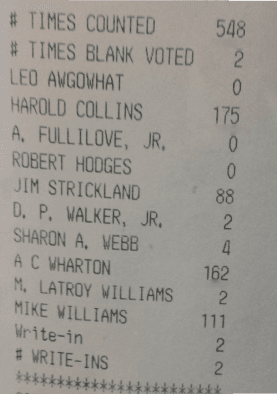
Computer programmer Bennie Smith photographed the poll tape at the Unity Christian Church polling place during the 2015 Memphis election. The tape showed 546 votes. When Shelby County released its official results, the same precinct showed 330 votes — 40% short.
Smith gave the photograph to a member of the county election commission. When technicians investigated, they found the problem was not limited to one precinct. In total, 1,001 votes had been dropped from the election night count — all from areas with large concentrations of Black voters. A candidate who had lost a close race filed a lawsuit. The county’s Administrator of Elections retired under pressure. State officials called for a criminal investigation. And the public eventually learned that Shelby County had been running vote tabulation software with a known vote-dropping bug — the same bug discovered in Ohio seven years earlier.
How Actual Vote would have helped: This is essentially a real-world demonstration of the Actual Vote concept in action. One person with one photo of one poll tape uncovered a 40% discrepancy, exposed a systemic problem affecting multiple precincts, and changed the trajectory of elections in their county. The question this case raises is not whether the methodology works — it demonstrably does — but what would have happened if Smith had been able to cover not one precinct but all of them. See the full case study for much more on this story.
Prince William County, Virginia, 2020
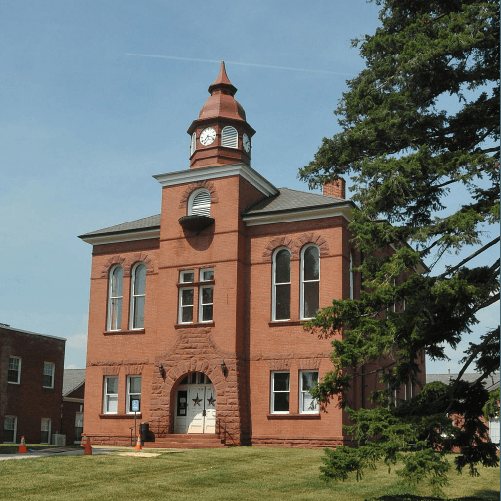
Prince William County misreported its 2020 election results by approximately 4,000 votes in the presidential race. Biden was shorted 1,648 votes; Trump was over-reported by 2,327. The root cause, identified by the county’s own investigation, was a technical formatting incompatibility: the scanners’ results tapes were not programmed to a format compatible with the state’s reporting requirements, and attempts to manually reformat the data introduced errors — particularly in “split precincts” that straddled congressional district boundaries.
The error went undetected for over a year. Virginia’s statewide risk-limiting audit — which confirmed counting accuracy with greater than 99% confidence — did not catch it, because the RLA checks whether scanners read ballots correctly, not whether scanner totals were faithfully transmitted to official results. The error was discovered only when a new registrar noticed identical vote totals in two adjacent precincts while responding to a public records request.
How Actual Vote would have helped: The scanners counted correctly and printed correct tapes. The error was introduced when those tape totals were reformatted for the state reporting system — a textbook reporting-layer failure. An AV comparison of tape totals against official results would have flagged the ~4,000-vote discrepancy within days of the election, not a year later. And because AV captures tapes independently at the precinct on election night, the evidence would exist outside the government’s chain of custody. See the full case study for much more on this story.
Monmouth County, New Jersey, 2022
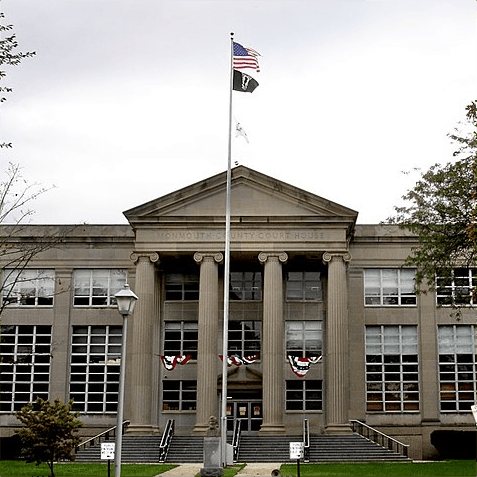
This is the only case in our collection where a reporting error definitively changed the outcome of an election. Four months before the November 2022 election, an ES&S employee — a customer relations manager with no software expertise — reinstalled the county’s election software to fix an unrelated network issue. He inadvertently removed a patch designed to prevent double-counting of votes. On election night, county personnel loaded six flash drives twice. Without the safeguard, every vote on those drives was counted twice. The wrong candidate was certified as the winner of a school board race and took office.
The official post-election audit reported “tabulation accuracy was 100%.” A person who noticed 311 phantom votes in another race was told he was comparing “apples to oranges.” It took over two months before the error was identified and a court-ordered hand recount corrected the result. A nine-month investigation by a former state attorney general found no fraud — only a chain of human errors compounded by fragile software architecture in which double-counting protection was a bolt-on patch rather than a core feature.
How Actual Vote would have helped: The poll tapes showed correct vote totals; the official results were inflated by the double count. An AV comparison would have flagged the discrepancy. New Jersey doesn’t require poll tapes to be posted on election night, but AV users can access them through appointments with election officials or public records requests — still far faster than the two-month discovery timeline. The faster independent verification can happen, the shorter errors persist. See the full case study for much more on this story.
Baldwin County, Alabama, 2002
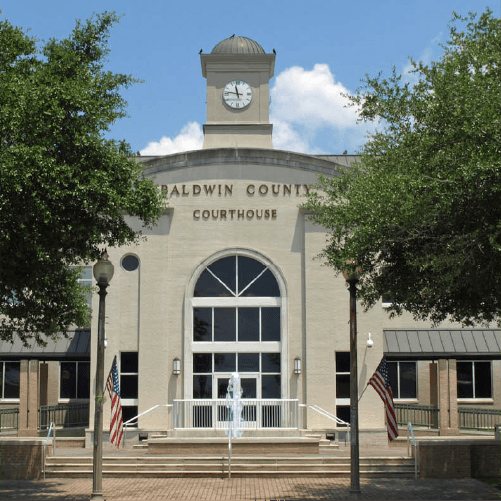
On election night, Democrat Don Siegelman won the governor’s race. He gave a victory speech. The Associated Press called the race. Then, after the Democratic county chair in Baldwin County had been told the courthouse was closing and had left, election officials reopened the building and continued counting. By morning, approximately 6,300 votes had vanished from Siegelman’s column at a single precinct — Magnolia Springs — where the initial count had shown roughly 7,000 votes at a location where only about 1,300 people actually voted. His opponent, Bob Riley, was now ahead by 3,120 votes statewide. Democrats demanded a recount; the Republican Attorney General blocked it. An Auburn University political scientist found that the corrected Baldwin County results made the county the most extreme statistical outlier in the state — the opposite of what a genuine error correction would produce. The question was never resolved. The ballots were later destroyed by law.
How Actual Vote would have helped: Independent poll tape recordings from the precinct in question would have shown what the scanner actually counted. That evidence would exist outside official custody and could not have been destroyed. The central question — what actually happened at Magnolia Springs — would have been answerable. See the full case study for much more on this story.
Georgia Presidential Election, 2020
Georgia’s hand tally in progress — context via the Carter Center.
Georgia’s 2020 presidential race was decided by 11,779 votes — close enough to trigger a full hand recount of nearly five million ballots. During that recount, four counties discovered that memory cards from precinct scanners had never been uploaded into their election management systems. In Floyd County, approximately 2,600 ballots were missing. In Fayette County, 2,755. In Walton County, 284. In Douglas County, 156. In total, nearly 5,800 votes were absent from the official results.
Every one of these errors was a reporting-layer failure. The scanners had counted correctly. The tabulator tapes had printed correctly. The paper ballots were intact. The only thing that went wrong was the electronic transmission of results from precinct to county — and the only reason anyone found out was that Georgia happened to conduct a full hand recount, an extraordinary process triggered solely by the margin.
Five years later, Fulton County — the state’s most populous — admitted that more than 130 tabulator tapes covering over 315,000 ballots had never been signed as required by Georgia law, and 10 tapes are missing entirely.
How Actual Vote would have helped: AV compares tabulator tape totals against officially reported results. In all four counties with missing memory cards, the tapes showed votes that the official results did not — a discrepancy AV would have flagged within days of the election, rather than requiring a statewide hand recount to discover. In Fulton County, AV’s independent tape records would exist regardless of whether official tapes were signed or missing. See the full case study for much more on this story.
The common thread
In each case above, there was no independent double-check of the vote reporting, leaving key questions that can never be answered. People were forced to move on despite a nagging sense that the official outcome wasn’t supported by a high enough standard of evidence.
In each case, if an independent double-check had been done — such as an Actual Vote analysis — voters would have had straightforward evidence about the accuracy of the officially reported totals. This evidence would have made the election more transparent: it would have increased the shared basis we all have to decide the extent to which we believe the results are accurate. For something as high-stakes as an election, that matters enormously.
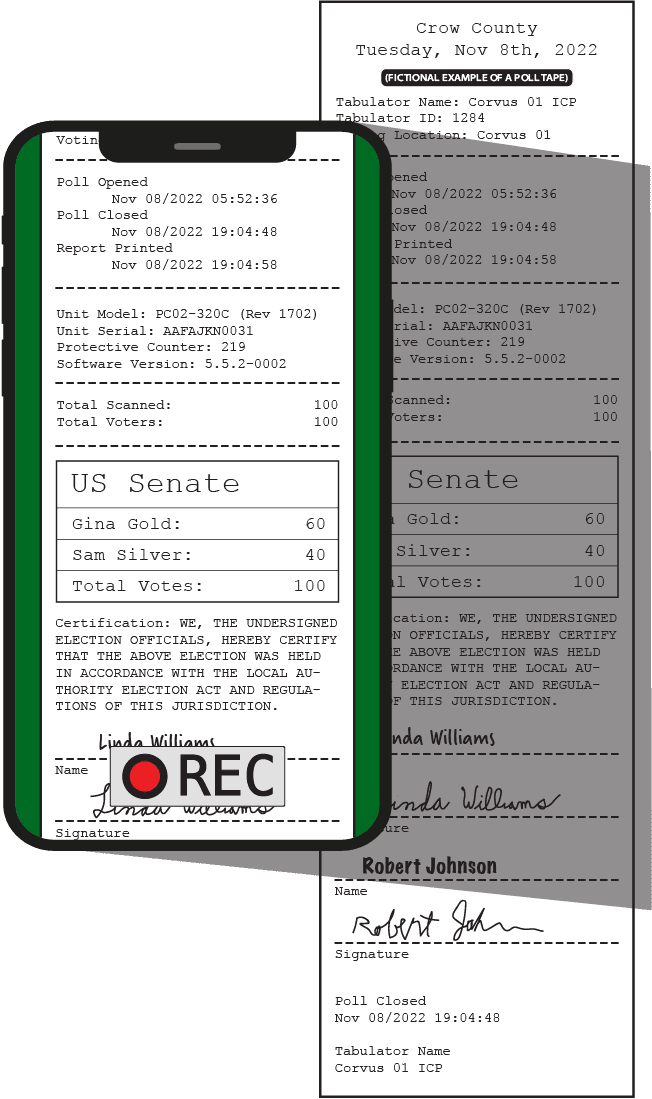
Actual Vote analyses with poll tape videos would have added much-needed clarity to each of the vote reporting incidents described above.
Want to dig deeper? These five are just a sample. We’ve fully researched eighteen documented cases — spanning more than a century, each with sources, analysis, and a side-by-side comparison of every one. Explore all 18 case studies →