
Step 6 of 7
Why Actual Vote Is Trustworthy
Five reasons the methodology is structurally sound — and the results that confirm it.
It’s easy to find claims about election audits and election integrity. Not all of them are trustworthy.
Now America Counts is inviting you to participate with Actual Vote — but why should you believe that the process is trustworthy?
There are five big reasons, plus real-world results that back them up. We’ll walk through each below.
1. Actual Vote uses a well-established auditing technique

Actual Vote isn’t a brand-new invention. It’s a specific application of an auditing technique called batch comparison auditing, which has been around in the academic and election administration world for more than a decade.
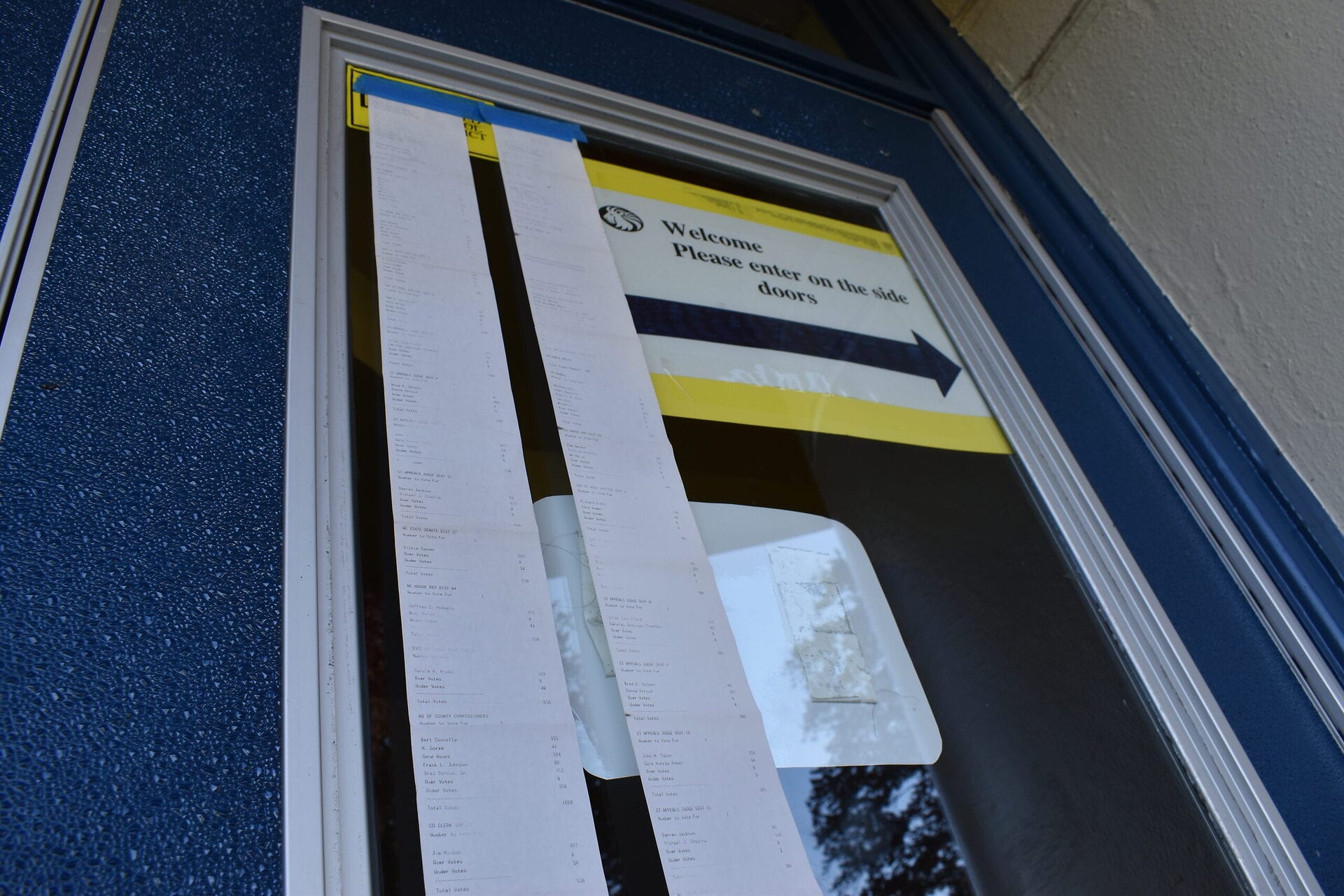
The basic idea: voting machines print paper poll tapes with local-level vote totals at each polling place. These local totals get aggregated to produce the official countywide and statewide results. A batch comparison audit checks whether the centrally reported numbers actually match the local-level numbers they were supposed to be built from. If they match, the vote reporting was done correctly. If they don’t, something needs to be investigated.
This isn’t a fringe idea. Researchers have been publishing peer-reviewed papers on it since at least 2008. Colorado has used the same batch-comparison check in its statewide risk-limiting audits since 2017 (C.R.S. § 1-7-515). The Election Assistance Commission, Verified Voting, and the Brennan Center all endorse rigorous post-election auditing as best practice.
Actual Vote applies this same technique in a new way — using volunteers with smartphones to record the poll tapes, instead of relying on election administration personnel. But the underlying logic is the same well-established approach that election experts have been refining for years. We didn’t invent the methodology. We made it accessible to anyone with a phone.
One difference is worth being upfront about: a risk-limiting audit checks a random sample of ballots and comes with a statistical guarantee called a risk limit. Actual Vote doesn’t sample and doesn’t compute a risk limit — it checks every precinct its volunteers cover, exhaustively. Its claims extend exactly as far as its coverage, no further. (For the curious: the statistics behind that statement are worked out honestly in our statistical inference paper.)
2. Using Actual Vote Is Legal
An Actual Vote analysis requires only two things:
- Video recordings of poll tapes made with the Actual Vote app
- The officially reported results for that county
Both are public information, and that single fact is what makes Actual Vote both trustworthy and lawful.
Vote totals are public information. That isn’t a technicality we’re leaning on — it’s the entire reason a poll tape can be taped to a window after the polls close, where anyone walking by can read it. It’s the same reason official results get published on the internet for anyone to download. Neither number was ever meant to be private.
Photographing things in public places is generally legal in the United States. Absent a specific statute or ordinance saying otherwise, you may photograph what you can see from a place you have a right to be.
Put those two together and recording a posted poll tape from a public sidewalk after the polls close is about as legally uncomplicated as photographing a menu in a restaurant window. No permission from any election official is required, because nothing private is involved.
The six ways in, and what makes each one lawful
Actual Vote uses six techniques for getting at poll tapes. They rest on three different legal footings:
- Publicly posted tapes. Election night at polling places, and early-voting tapes where they’re posted or shown in public — the tape is publicly displayed and you record it from a place you have a right to be. This needs no permission from anyone, and it’s how most Actual Vote recordings are made.
- Access you’ve been granted. As a poll observer, recording the tape as part of the closing procedure with your supervisor’s agreement; by appointment at the elections office after election day; or observing at a central tabulation facility where your state opens that process to the public. Here your legal basis is the credential or the arrangement, so its terms are what govern — including any instruction not to record.
- A statutory right to the records. A public-records or FOIA request doesn’t ask permission at all. Poll tapes are government records, and public-records law gives you a right to obtain them. This is the route that works even where nothing is posted and nothing is open to observers.
Which of these is available to you depends on your state — and in some states, on your county.
Two things that are not lawful
We’re emphatic about both of these.
Don’t record while the polls are still open. Many states prohibit photography at a polling place during voting, and some set a specific perimeter. There’s also no reason to: the tape doesn’t exist until the closing procedure prints it.
If someone with authority tells you to stop, you don’t argue. A property owner can lawfully ask you not to record on their premises, and you’re obligated to honor that. With a poll worker or official, you can give one calm, polite explanation if you feel safe doing so, and stop if they still say no. You can usually keep going from a public sidewalk or parking lot where the posted tape is still visible — and if you think the instruction was wrong, tell us and we’ll take it up through proper channels. Never by ignoring it on the spot.
None of this is legal advice, and rules genuinely differ by state and sometimes by county. If you hit a local rule that contradicts anything here, the local rule wins — follow it, then let us know so we can correct our guidance.
Why this also means Actual Vote can’t be weaponized
The flip side of using only public information is that there’s nothing here to abuse. You don’t need private data that could be turned to partisan advantage. You don’t need access to sensitive parts of the election process — not tabulation, not the reporting system, nothing an insider would have. An Actual Vote analysis is just a disciplined way of cross-referencing the public vote totals on the poll tapes, captured at the very beginning of the reporting process, against the public vote totals in the official results at the end of it.
Want the full treatment? The Technical Manual works through the law properly: the general legal principle and the Krages reference, the three lawful recording cases, and what isn’t legal.
3. Any person can participate
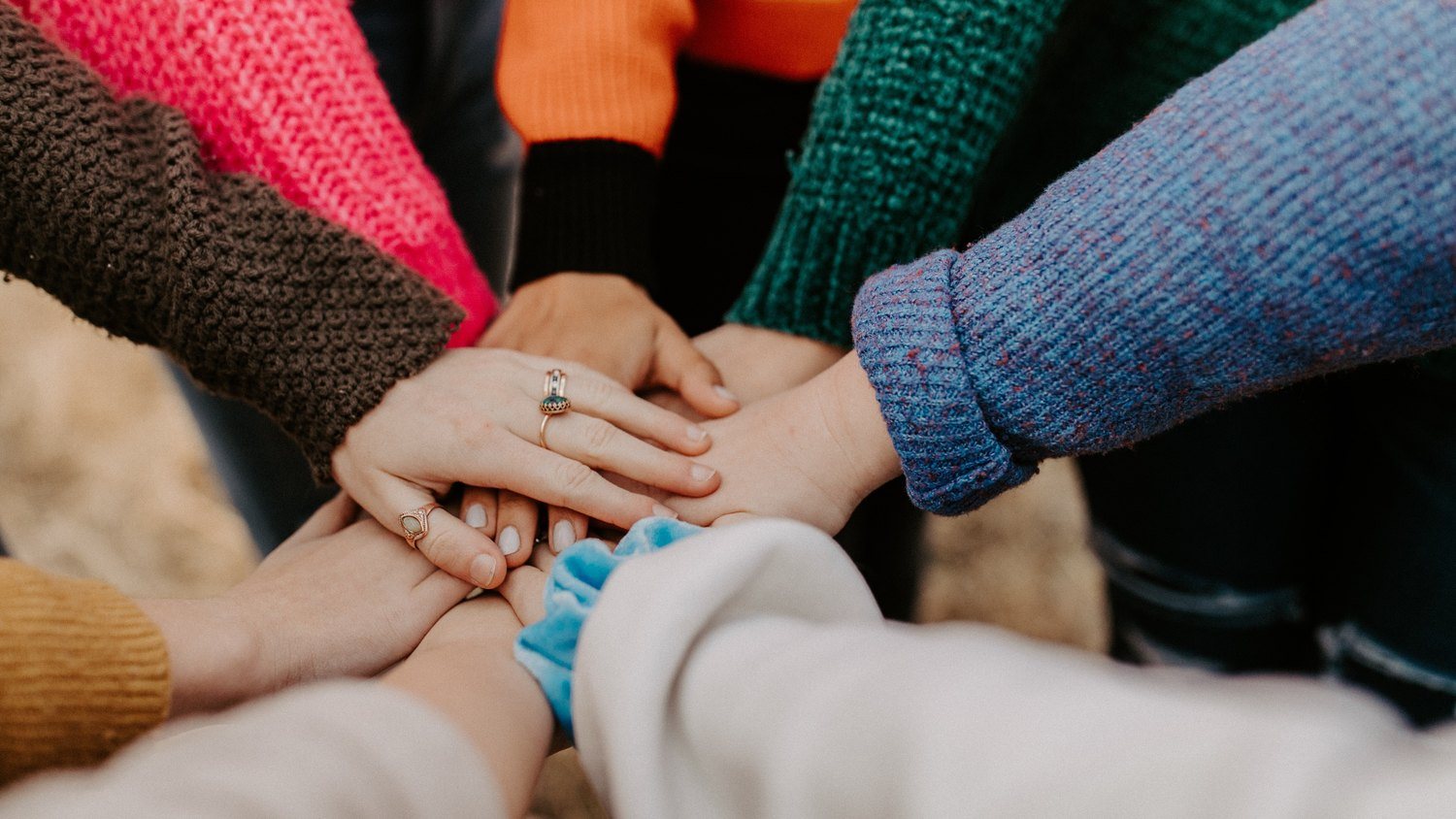
Everyone in this picture is invited to participate with Actual Vote. You are too!
The basic requirements for video-recording poll tapes with the Actual Vote app are minimal: have a mobile device that can run the app (nearly everyone does), have a method of accessing poll tapes (there’s at least one method available to everyone), be able to safely do so, and be at least 13 years old — signing in uses a Google account, and Google sets that floor. Younger helpers are welcome alongside an adult; plenty of the work doesn’t involve a phone at all.
Beyond that: the app is free, so there’s no cost barrier. No training is required, though America Counts offers helpful training to anyone who wants it (let us know!). And there are no partisan prerequisites — partisans of all stripes, and non-partisans alike, are welcome.
This matters because the broader the participation, the harder it becomes for any one group to bias the results. If only one party were using Actual Vote, you might worry that they’d somehow tilt things in their favor. But Actual Vote is open to everyone, which means everyone can keep an eye on everyone else — including by doing their own audits to check the work of others.
4. Anyone can double-check an Actual Vote analysis
If you find an error in this 2024 Actual Vote report, please let us know!
Imagine a partisan bad actor fabricates an Actual Vote analysis claiming to reveal an error in vote reporting that cost their candidate the election. Since all of the underlying data is public, analysts from the other candidate’s campaign would be able to immediately check that claim by doing their own comparison of the poll tape videos with the official results. And they’d find that the claim is false — because their own analysis would show the vote reporting was accurate.
The same goes for America Counts itself. Even if you suspect that we might somehow be playing favorites (we’re not, but suppose you were skeptical), our published findings can be checked against the same public data. If we ever published a report that didn’t match what the underlying recordings actually show, anyone who looked at the public archive at av.democracycounts.org would notice the discrepancy immediately. We can’t fake findings even if we wanted to, because the evidence is in the public record for everyone to see.
Trust based on “you can check our work yourself” is much stronger than trust based on “take our word for it.” Actual Vote is built on the first kind.
This is also the answer to a question people increasingly ask: if a computer is reading the tapes now, can I trust that? Increasingly, the first read of each tape is done by software — a pipeline we call Actual Vote Assist — rather than by a person typing numbers into a spreadsheet. That might sound like it weakens the guarantee, but it doesn’t, for two reasons. First, the software is built to flag what it can’t read clearly rather than guess: a blurry tape produces fewer confident numbers, never invented ones, and anything it’s unsure about is handed to a person to resolve. Second — and this is the important part — none of it is taken on faith. The original recordings stay in the public archive, so anyone can replay the video and check the machine’s reading against the tape themselves, exactly as they could check a human transcriber. Automation lets us cover far more of an election; it doesn’t ask you to trust a black box.
5. It would be difficult and inefficient to abuse Actual Vote to attack an election
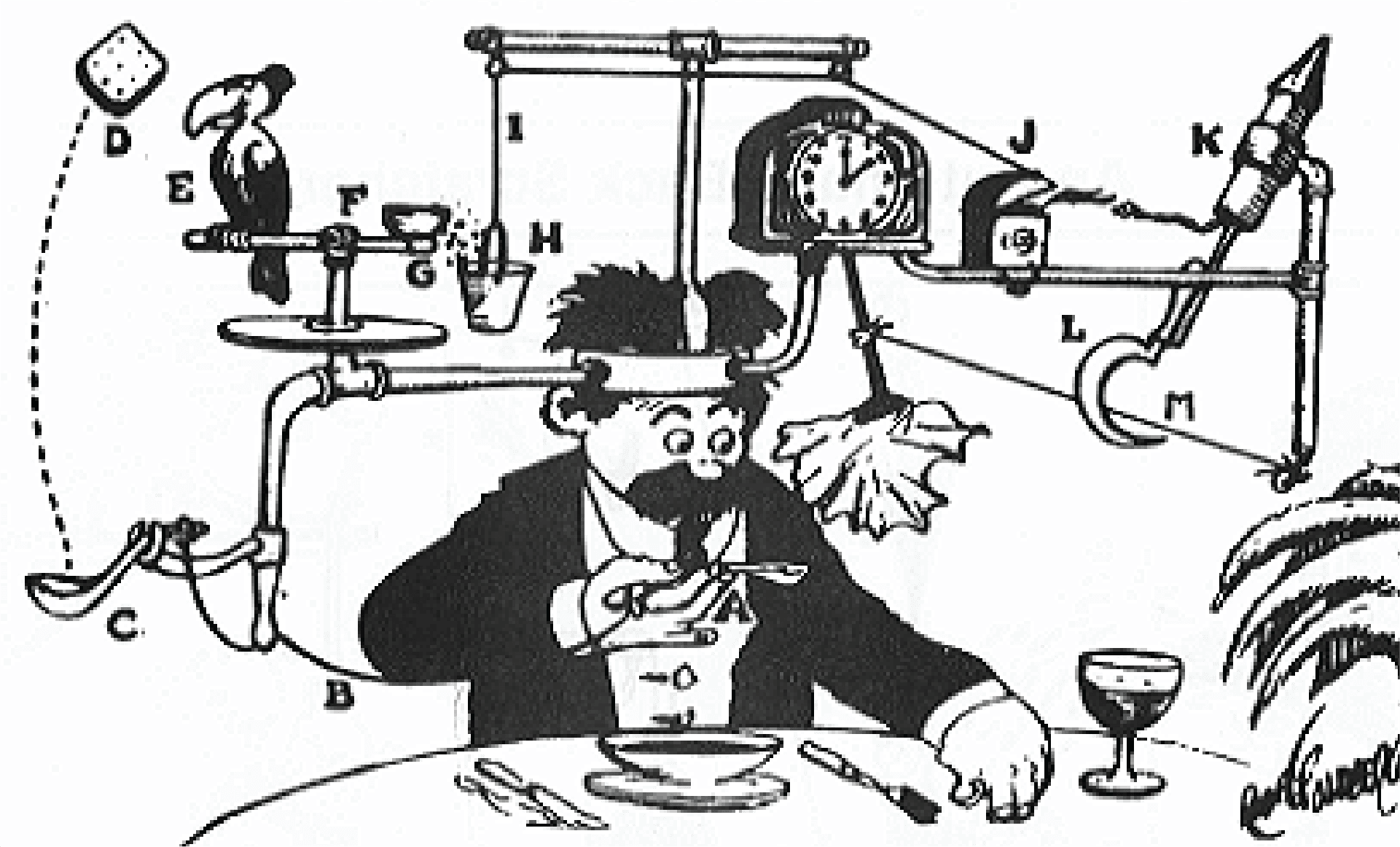
This contraption is a highly inefficient way to use a napkin.
We’ve just seen that it’s easy to detect when an Actual Vote analysis has been done incorrectly. But are there other, harder-to-detect ways a partisan bad actor might abuse Actual Vote?
In principle, with any complicated system, some convoluted scheme might exist. But in practice, the key fact is that even if a staunch partisan undertakes an Actual Vote project with the sole motivation of helping their party, the most they could accomplish is to generate independent evidence about what the vote reporting actually was — regardless of how that impacts their party.
In fact, we actively encourage partisan groups and campaigns to use Actual Vote in areas where the opposing party is likely to win, since they’ll be highly motivated to verify that no errors hurt their candidate. But regardless of their hypothesis going in, their analysis will only reveal the ground truth of what happened.
For this reason, if a group of determined partisans wanted to attack an election, there’s simply not much they could realistically do with Actual Vote itself. Other methods of cheating would be far more efficient. (Not that we recommend any of those either.)
This is why America Counts is confident in making Actual Vote free and open to everyone — because using it can only have a neutral or positive impact on election transparency and accuracy.
And it’s not just theory — Actual Vote has been put to the test
The five reasons above describe how Actual Vote is designed. But it’s worth knowing that Actual Vote has actually been used in real elections, and the results bear out the theory.
To date, Actual Vote analyses have independently audited 2,708,732 individual votes across 27 county-level election audits in Florida, Georgia, Missouri, North Carolina, and Virginia. Across 21,061 tape-to-official comparisons, every initial non-match that ever arose has been accounted for after investigation — none remain unresolved.
The cleanest single example is the 2024 North Carolina Primary, where volunteers across seven counties audited 321,502 individual votes and the comparison found zero discrepancies of any kind. You can read the full report here.
The most instructive case so far is the 2022 Wake County Midterm, in North Carolina’s largest county. There the comparison initially surfaced 189 values that didn’t match on first pass — and every one of them was accounted for. Most were ordinary mechanics: 27 were write-ins counted differently on the tape and in the official results, and 83 came from sites where we had recorded only one of two machines’ tapes. The other 79 were explained by canvass mechanisms the county itself identified. None remained unresolved. That’s arguably a more reassuring result than a clean zero, because it shows what happens when the numbers don’t line up at first glance: we don’t assume a mismatch means error or fraud — we investigate, ask the county, and publish what we find. You can read the full Wake County report here.
Some people might find these results boring. But they’re actually really important. The whole point of routine election auditing is to provide confidence that vote reporting is being done correctly when it is — not just to catch dramatic cases of fraud, which are rare. Every time an Actual Vote analysis confirms that the official results match the local-level totals, that’s a meaningful contribution to public confidence in elections.
When Actual Vote does eventually find a discrepancy that survives investigation (and statistically, it will at some point), we’ll publish it the same way we publish the confirming findings: descriptively, without speculation about cause, and anchored in the public archive so anyone can verify the work.
The bottom line
You should trust Actual Vote because:
- The method is well-established. Batch comparison auditing has been around for over a decade, has been peer-reviewed, and has been adopted by states; rigorous post-election auditing is endorsed as best practice by major civic organizations.
- It uses only public information. No private data, no access to sensitive election machinery, no opportunities for abuse.
- It’s open to everyone. No cost barrier, no training requirement, no partisan prerequisites. Anyone can participate, which means anyone can keep everyone else honest.
- It’s fully transparent. Every recording is in the public archive at av.democracycounts.org. Every analysis can be double-checked by anyone.
- It can’t really be abused. Even a bad actor trying their hardest can only produce honest evidence about what the vote reporting actually was.
You don’t need to take our word for any of this. The recordings are public. The methodology is documented. The findings are checkable. That’s the point.